Selecting the right rainscreen cladding for housing, public buildings, schools and regeneration projects has never been more important. With rising expectations around safety, durability and long‑term performance, specifiers and local authorities need confidence that façade materials will stand up to real‑world use.
One of the most important ways to demonstrate this is through impact testing, which assesses how a cladding system behaves when subjected to sudden force under realistic installation conditions.
What Does Impact Testing Involve?
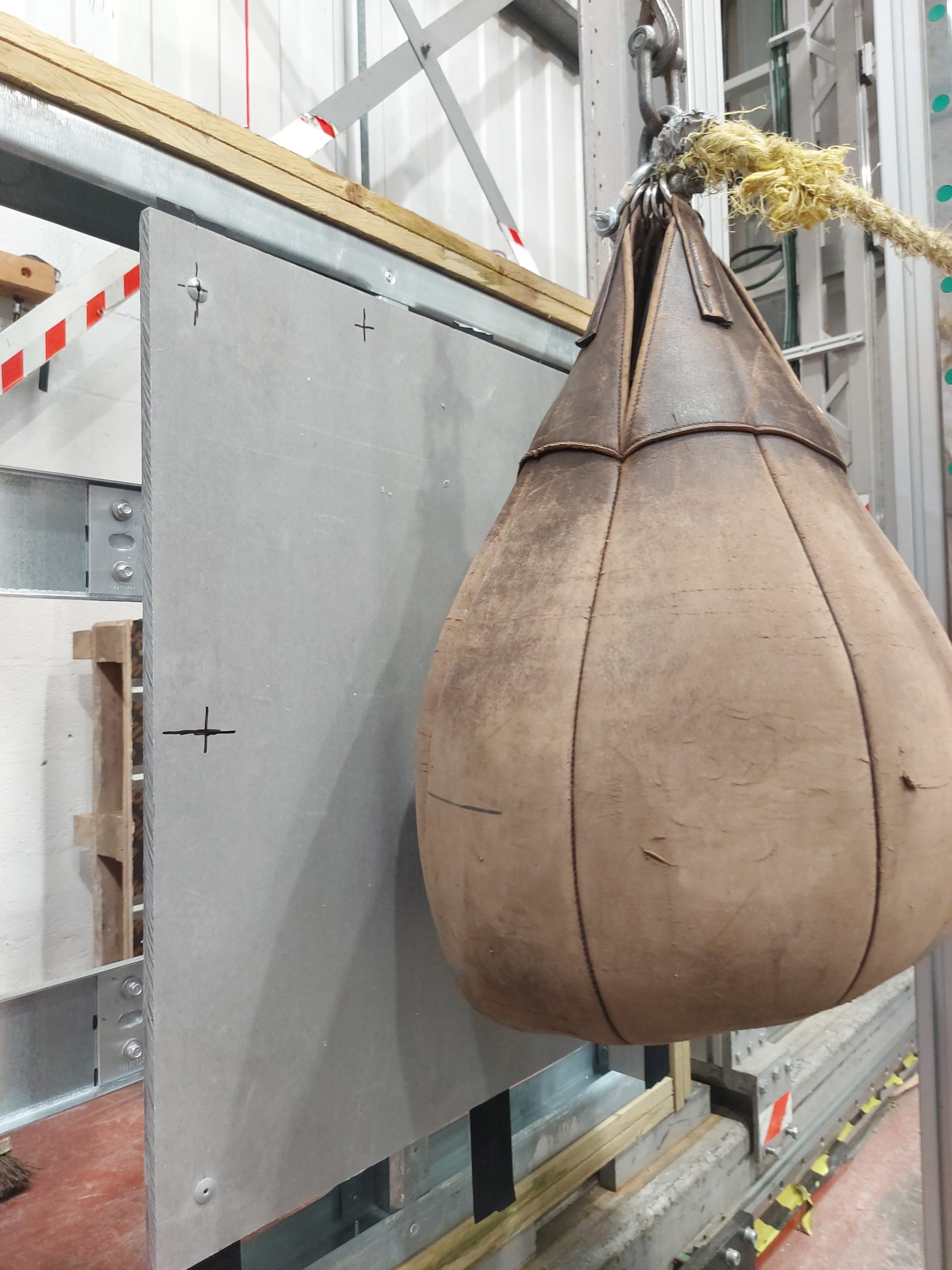
Impact testing is an industry‑recognised method used to evaluate the strength and durability of exterior façade panels once installed as a system. Panels are subjected to hard‑body and soft‑body impacts that replicate typical in‑service scenarios, such as accidental knocks, vandalism, or human contact.
Testing is carried out in controlled environments using calibrated equipment, with procedures guided by recognised standards including CWCT Technical Notes TN75 and TN76, which outline pendulum‑based impact methods for cladding assessments.
Crucially, impact testing looks beyond the panel itself. Fixing method, panel thickness, support spacing and backing installation all play a role in how a façade performs when impacted.
Recent UL Impact Testing: Tested to Practical, Buildable Standards
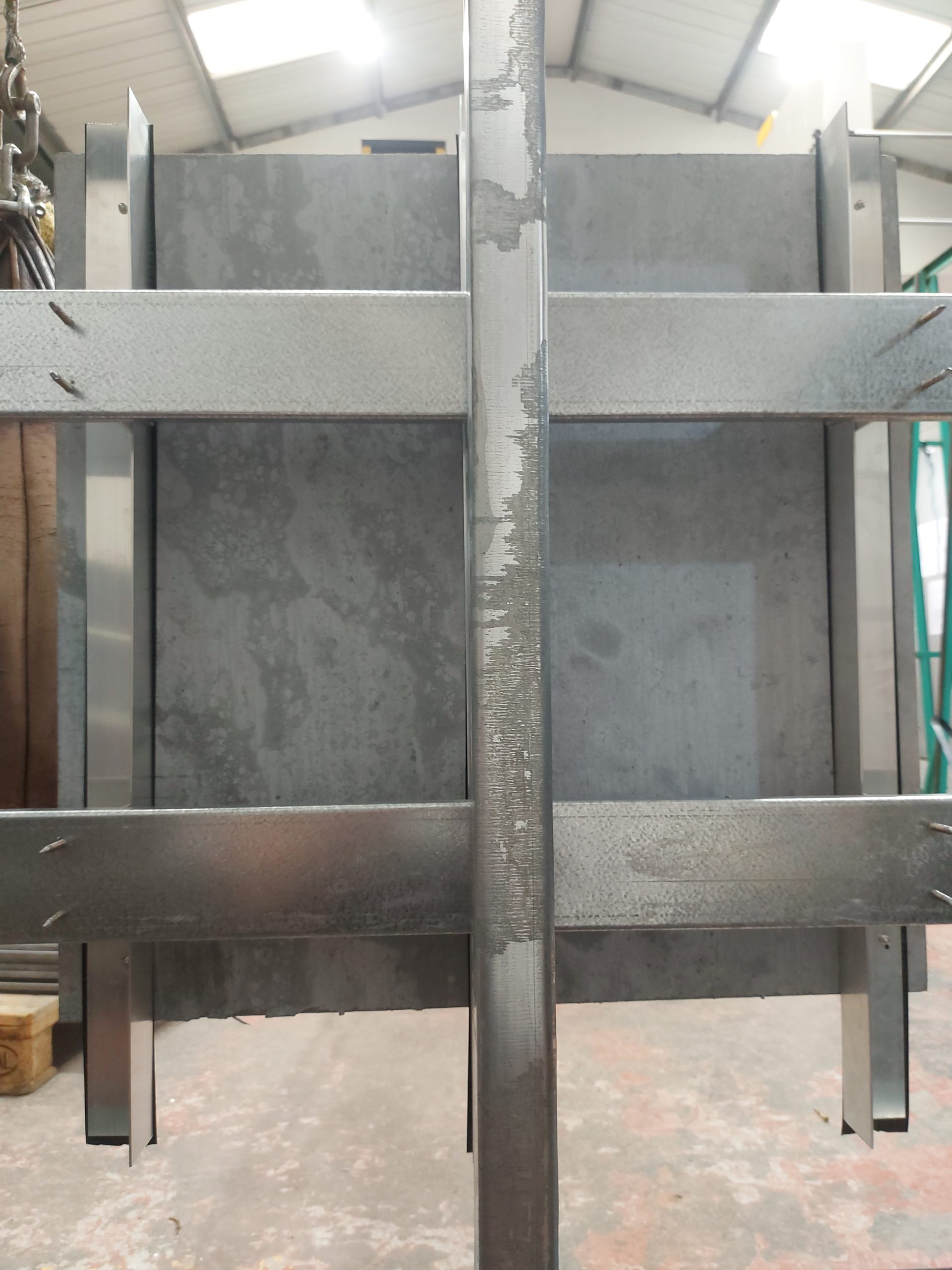
During recent testing at UL’s dedicated facility in Telford, Valcan carried out impact testing on Ceramapanel® installed as a complete system, using:
- 10 mm Ceramapanel® fibre cement panels
- Installed at 600mm centres
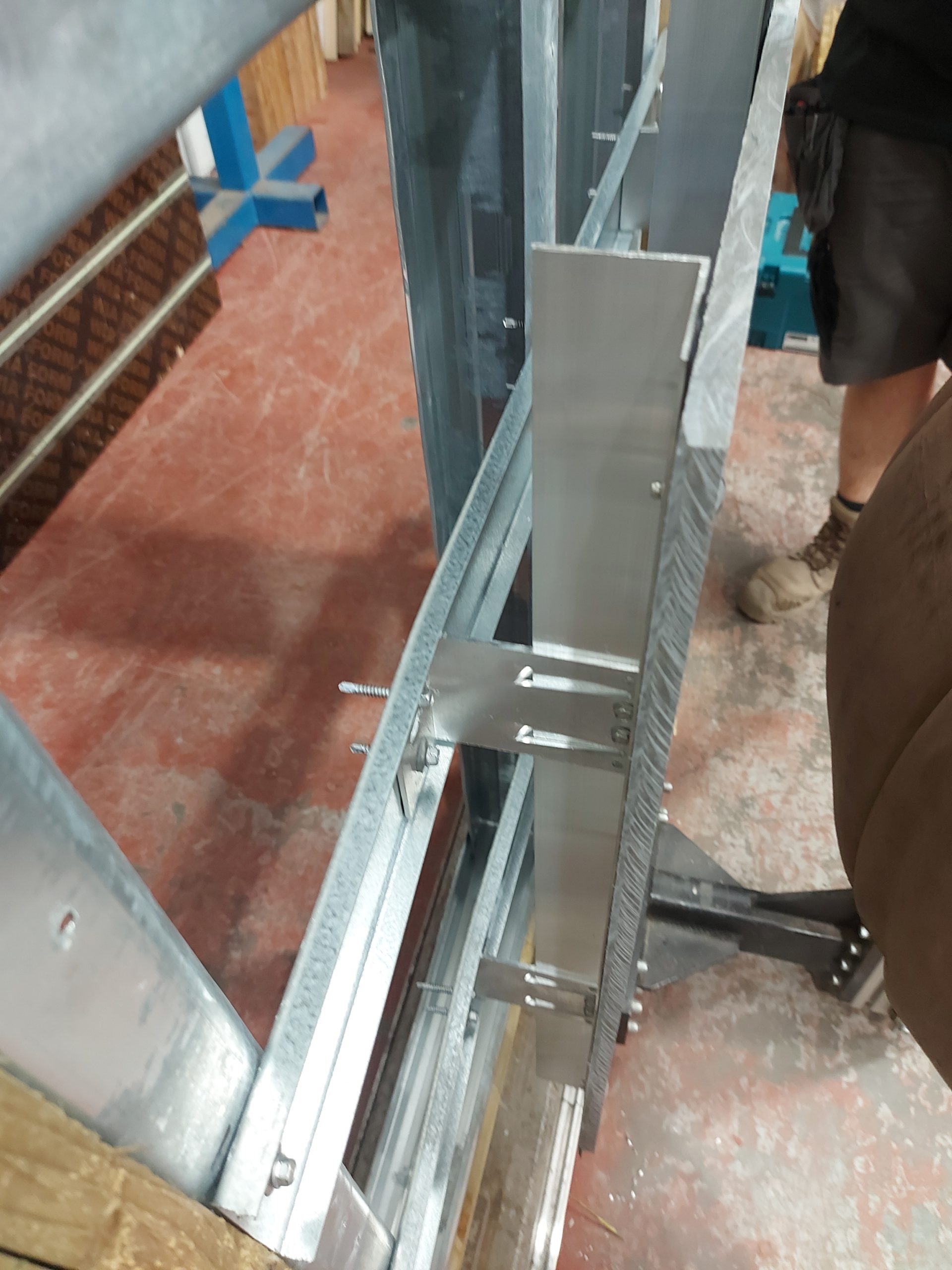
- Mounted on a ghost batten support system
- VitraFix subframe and rivet fixings
This configuration reflects a common specification used in real projects and is important in understanding how impact performance relates to practical application on site.
The system was subjected to hard‑body and soft‑body impacts representative of public‑facing environments. Under these conditions, Ceramapanel® demonstrated robust performance, remaining intact and behaving predictably when impacted.
Understanding Category II Use Classifications
Impact performance is often discussed alongside Use Categories, which are defined in EAD 090062‑00‑0404:2018, Table G.2. These categories describe the likelihood and severity of impact exposure based on building location and accessibility.
The Use Categories are defined as:
- Category I: Zones readily accessible at ground level and vulnerable to hard‑body impacts, but not subjected to abnormally rough use.
- Category II: Zones liable to impacts from thrown or kicked objects, typically in public locations where building height limits impact severity, or at lower levels where access is mainly limited to users with some incentive to exercise care.
- Category III: Zones not likely to be damaged by normal impacts caused by people or by thrown or kicked objects.
- Category IV: Zones out of reach from ground level.
In practical terms, Category II is commonly associated with residential façades, education buildings and public settings at low to mid‑level heights, where accidental or opportunistic impact is possible but not extreme.

 Rainscreen CladdingA1/A2 cladding panels
 Fibre Cement Cladding
 Cladding Systems
 Subframe SystemsRainscreen Cladding Support
  Recladding
 CERAMAPANEL®A1 | Fibre Cement Cladding
 VitraDual®A1 | Aluminium Cladding
 FrontekA1 | Extruded Porcelain Cladding
 EVVERLAP®A2 | Fibre Cement Planks
 VitraFix®Aluminium Subframe Systems